5 Surprising Discoveries About a Prehistoric Creature with a Twisted Jaw
Deep in Brazil's ancient riverbeds, scientists have unearthed a truly bizarre fossil that challenges our understanding of prehistoric life. The creature, Tanyka amnicola, lived 275 million years ago and possessed a twisted jaw unlike any animal alive today. This discovery not only reveals a unique anatomical feature but also sheds light on the resilience of certain lineages. Here are five key insights from this remarkable find.
1. A Chance Find in a Dried-Up Riverbed
The fossilized remains of Tanyka amnicola were discovered in a parched riverbed in Brazil, a site that once teemed with ancient life. Scientists initially stumbled upon twisted jawbones that seemed out of place in the geological record. These bones belonged to a long-lost animal that had survived far longer than expected, acting as a 'living fossil' of the Permian period. The location itself offers clues about the environment where this creature thrived, hinting at a lush, water-rich habitat that eventually dried up over millions of years.
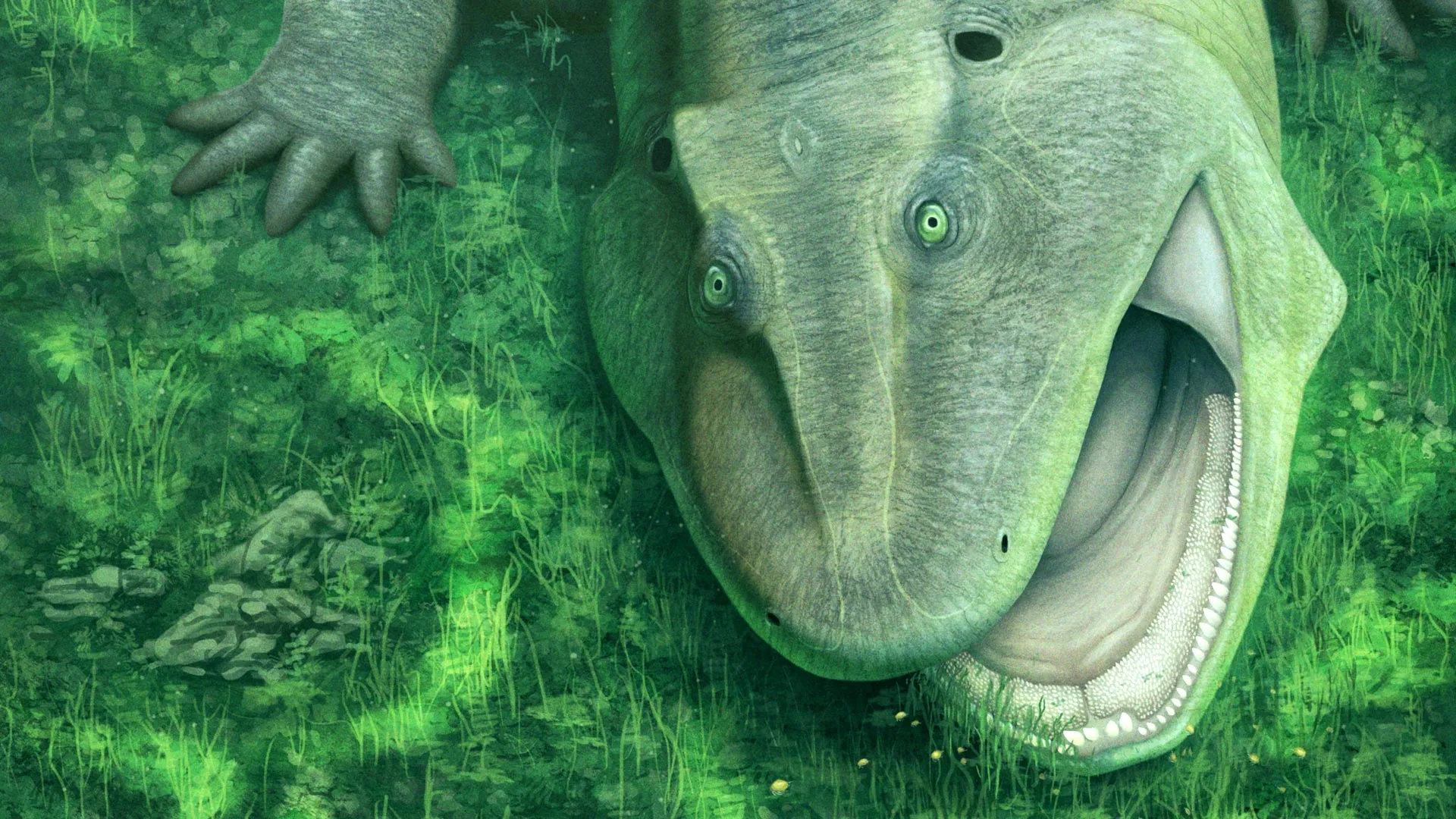
2. The Twisted Jaw: A Functional Enigma
What makes Tanyka amnicola truly peculiar is its twisted jaw structure. This asymmetrical feature is not seen in any modern animal and has puzzled paleontologists. The twist may have allowed the creature to feed on specific prey or break down tough plant material in a unique way. Some theories suggest it enhanced bite force or helped in capturing slippery aquatic organisms. While its exact function remains speculative, the jaw's morphology indicates a highly specialized diet and an evolutionary path that diverged sharply from other tetrapods of the time.
3. A Survivor from an Ancient Lineage
Contrary to expectations, Tanyka amnicola belonged to a group of tetrapods that were thought to have gone extinct much earlier. This discovery pushes back the timeline for this lineage, showing that it persisted well into the Permian. In a sense, it was a 'living fossil' in its own era—an animal that coexisted with more advanced forms while retaining primitive traits. This highlights how certain lineages can endure in isolated habitats, resisting extinction long after their relatives have disappeared.
4. Reconstructing Its Appearance and Lifestyle
From the twisted jaw and associated bones, researchers have reconstructed Tanyka amnicola as a medium-sized, probably semi-aquatic creature. It likely had a robust body, short limbs, and a flattened skull adapted for life in water. The jaw's twist would have given it a distinctive asymmetric bite, useful for crushing shells or gripping prey. Its teeth suggest an omnivorous diet, feeding on small fish, insects, and aquatic plants. This versatility may have been key to its survival in changing environments.
5. What This Fossil Teaches Us About Evolution
The existence of Tanyka amnicola challenges the traditional view of evolution as a linear progression. Instead, it illustrates that evolution can produce bizarre, one-off adaptations that are highly effective in specific ecological niches. The twisted jaw is a prime example of how random mutations can lead to successful, if unconventional, body plans. This fossil also underscores the importance of exploring less-studied regions like Brazil, where hidden chapters of Earth's history await discovery.
In conclusion, the twisted-jawed Tanyka amnicola is more than just a curiosity—it is a testament to the creativity of evolution and the resilience of life. Its discovery forces us to rethink the timelines and diversity of prehistoric ecosystems. As more fossils emerge from Brazil's ancient riverbeds, we may find that such oddities were not as rare as we once believed. For now, this twisted enigma stands as a reminder that nature's experiments are often stranger than we can imagine.