10 Pokémon-Inspired Lessons to Master Prolog Programming
If you’ve ever struggled to wrap your head around Prolog—the logic programming language that once promised to revolutionize AI—you’re not alone. Unlike the step-by-step instructions of Python or JavaScript, Prolog feels like a foreign tongue. But what if you could learn it through Pokémon? That’s exactly what Alexander Petros did, using the classic card game to demystify facts, rules, and queries. In this listicle, we’ll explore ten key concepts of Prolog, each illuminated by a Pokémon example. By the end, you’ll see Prolog not as a dusty relic of expert systems, but as a fun, logical playground.
1. Prolog Is Declarative, Not Imperative
Most programming languages tell the computer how to solve a problem—step by step. Prolog turns that upside down: you tell it what the problem is, and it figures out the how. Think of it like describing a Pokémon battle without scripting moves. You declare facts (Squirtle is a Water type) and rules (Water beats Fire), and Prolog uses logic to answer who wins. No loops or variables needed—just pure description. This makes Prolog perfect for problems where relationships matter more than procedures.
2. Facts Are the Building Blocks
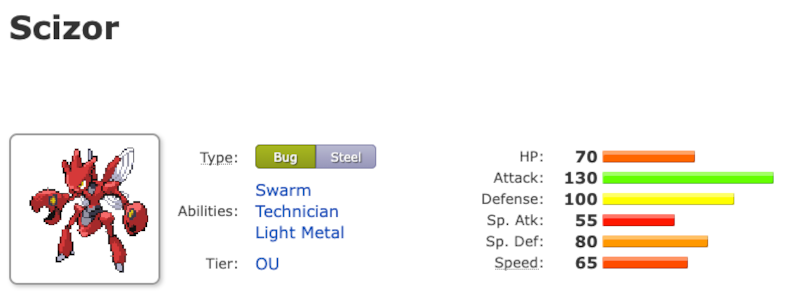
In Prolog, everything starts with facts. A fact is a simple statement that is always true, like “pokemon(bulbasaur).” In Pokémon terms, you’d list each character’s attributes: “type(bulbasaur, grass).” Whether you have 151 or 898 pocket monsters, you just add facts. Prolog stores them as a database. No if-then logic, no assignment—just a collection of truths. The beauty is that you can query anything: “Which Pokémon are Grass types?” Prolog scans the facts and returns every match.
3. Rules Create Relationships
Rules are where Prolog shines. They define how facts relate to each other. For instance, “evolves(X, Y) :- firstStage(X), secondStage(Y).” That means a rule can chain facts together. In Pokémon, you might write: “advantage(X, Y) :- type(X, water), type(Y, fire).” When you ask “advantage(squirtle, charmander)”, Prolog checks the rule against the facts and answers true. You can also use variables: “advantage(X, charmander)” gives you all X that beat Charmander. This inferential power is what made Prolog a darling of early AI.
4. Queries Are Like Asking a Pokédex
Imagine asking your Pokédex: “Which Pokémon know Thunderbolt and are Electric type?” In Prolog, you’d write: “?- knows(X, thunderbolt), type(X, electric).” Prolog then searches its fact-and-rule database to find X. You can even use wildcards: “?- type(X, Y).” returns every Pokémon with its type. This makes Prolog a powerful query language—think SQL but with logical inference. The result is always a list of solutions or a yes/no answer. No loops required; the language’s built-in engine does the exploration.
5. The Pokémon Analogy Is Perfect for Prolog
Why Pokémon? Because the game is built on fixed attributes (types, HP, moves) and rules (effectiveness, evolution). Prolog’s declarative style matches this naturally. You declare Charmander’s type as fire, Squirtle’s as water, then a rule: water is super effective against fire. Query “super_effective(squirtle, charmander)” and Prolog proves it. No need to write battle algorithms—just facts and relationships. This analogy makes Prolog accessible, especially for those familiar with card games or RPGs where logic drives interactions.
6. Variables Let You Ask Flexible Questions
Prolog variables are placeholders that start with a capital letter. They can match anything. For example, “?- type(bulbasaur, X).” returns X = grass; X = poison (since it’s dual-type). You can combine variables in queries: “?- type(X, fire), evolves_from(X, Y).” This gives you all Fire Pokémon that evolved from something. Variables turn Prolog into a search engine for your own data. In Pokémon terms, it’s like asking “Which Pokémon of type Water can learn Ice Beam?” without writing a single loop.
7. Backtracking Finds All Solutions
When Prolog answers a query, it doesn’t stop at the first match. It uses backtracking to systematically explore every possibility. Suppose you define “pokemon(charmander), pokemon(squirtle), pokemon(bulbasaur).” Then query “?- pokemon(X).” Prolog returns X = charmander; then if you press ‘;’, it returns X = squirtle; then X = bulbasaur. This is like scrolling through a Pokédex list. Backtracking ensures you never miss a valid answer—critical for complex rule chains where multiple paths exist.
8. The Cut Operator (!) Controls Search
Sometimes backtracking is wasteful. Prolog offers the cut operator (!) to prune the search tree. Once a cut is reached, Prolog commits to the choices made so far—no backtracking beyond that point. In Pokémon, imagine you need only the first Pokémon of each type for a tournament. You’d write a rule with ! to stop looking after the first match. Many purists avoid cut because it breaks the declarative flow, but in performance-critical applications (like a Pokédex API), it’s essential.
9. Prolog Is a Specialized Database, Not a General Language
Prolog excels when your problem is all about relationships and inference—like Pokémon type matchups, family trees, or expert systems. It’s terrible for number crunching or UI design. The language was once hailed as the “next big thing” for AI (especially expert systems), but it faded as neural networks rose. Still, for logic puzzles, rule-based games, or even complex queries on structured data, Prolog remains unmatched. You can even mix it with C for performance when needed.
10. You Can Combine Prolog with Other Languages
Don’t think Prolog has to stand alone. Many developers embed Prolog engines in larger apps using C interfaces (like SWI-Prolog’s foreign language interface). For instance, you could write a Pokémon battle simulator in C but use Prolog to handle type-effectiveness logic. There was even a computer—the Prolog machine—that ran Prolog as its operating system. While that’s extreme, the ability to integrate Prolog with traditional languages gives you the best of both worlds: logical inference where it shines, and procedural code where you need it.
Conclusion
Prolog may feel alien at first, but with Pokémon as your guide, its logic becomes second nature. From facts and rules to backtracking and cut, each concept maps neatly to the world of pocket monsters. Whether you’re building an expert system or just satisfying your curiosity, these ten lessons give you a solid foundation. So next time you’re battling with Bulbasaur or Squirtle, remember: you’re not just playing a game—you’re thinking in Prolog.