AI and Energy: Forging the Future of American Innovation Through the Genesis Mission
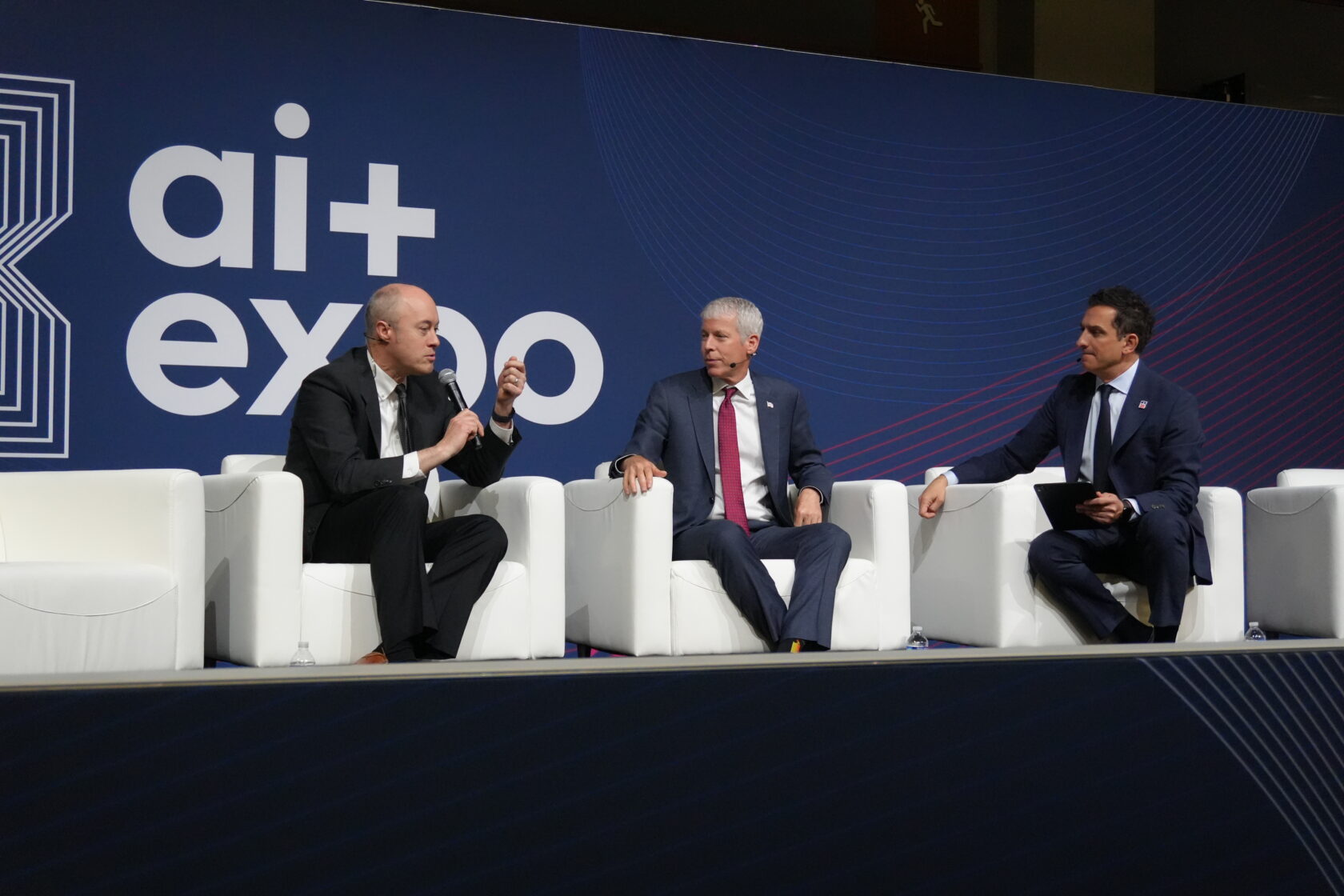
The future of American technological leadership hinges on two symbiotic pillars: artificial intelligence and energy. This was the central theme of a compelling fireside chat at the SCSP AI+ Expo, where U.S. Energy Secretary Chris Wright and NVIDIA's Vice President of Hyperscale and High-Performance Computing, Ian Buck, laid out their vision for the Genesis Mission. Their message was clear: American leadership in AI is inextricably linked to American leadership in energy production and innovation.
The Core Argument: Energy as the Foundation of AI
Secretary Wright opened the conversation with a powerful statement: “Energy is life. The more energy you have, the more affordable energy you have, the more opportunities you have in your society.” This perspective highlights that energy isn't just a resource—it's the bedrock of economic growth, scientific discovery, and societal progress. The rapid expansion of AI, with its massive computational demands, makes energy availability and affordability even more critical. The question, then, is how to meet these needs sustainably and efficiently.

Ian Buck added a crucial twist: AI itself will help build the energy infrastructure it requires. Through advanced modeling, optimization, and discovery, AI can accelerate breakthroughs in energy generation, storage, and distribution. This reciprocal relationship—energy powering AI, and AI enhancing energy—forms the foundation of the Genesis Mission.
The Genesis Mission: AI for Scientific Discovery
The U.S. Department of Energy (DOE) has launched the Genesis Mission, an ambitious initiative to apply AI across scientific discovery. It aims to harness the power of machine learning and high-performance computing to solve some of the nation's most pressing challenges, from climate modeling to materials science. NVIDIA is a key partner in this mission, building on a two-decade history of collaboration with the national labs.
Ian Buck expressed strong enthusiasm: “NVIDIA is 100% committed and invested in Genesis. I’ve never seen more excitement across the lab and industry.” This partnership combines the DOE's vast resources—17 national labs, world-class scientists, and massive datasets—with NVIDIA's full-stack computing expertise, including hardware, algorithms, and software frameworks.
What the Genesis Mission Means in Practice
The mission isn't just a theoretical concept; it's already producing tangible outcomes. For instance, NVIDIA has developed an open-source AI model trained on 1.5 million physics papers, then fine-tuned on 100,000 papers specifically focused on energy and materials. This model is available for scientists worldwide to accelerate their research, democratizing access to cutting-edge AI for scientific discovery.
The DOE-NVIDIA Partnership: A Scalable Approach
The partnership goes beyond sharing resources. NVIDIA brings its full computing stack to the table, including not only graphics processing units (GPUs) but also optimized algorithms and methodologies refined over 20 years of collaboration. This integrated approach allows the DOE to tackle problems at unprecedented scale.
Two major AI supercomputers are being built at Argonne National Laboratory under this partnership:
- Equinox: Currently being deployed with 10,000 NVIDIA Grace Blackwell GPUs. Buck noted that these are “the same GPU, the same software being used to train and build AI that we’re all enjoying today.”
- Solstice: A future system equipped with 100,000 next-generation GPUs (based on the Vera Rubin architecture). This machine will deliver an astonishing 5,000 exaflops of performance—five times greater than the entire current TOP500 supercomputer list combined.
Buck emphasized that these systems are not siloed; they use the same technology stack as leading AI labs worldwide. “We’re creating all the same technology, all the same hardware, all the same software building blocks used by all the major AI labs around the world,” he said, “for all of world science to go get access to.” This openness is a deliberate strategy to accelerate global scientific progress while reinforcing American leadership.
Broader Implications and Next Steps
The discussion at the SCSP AI+ Expo was part of a broader series of panels featuring NVIDIA leaders at the conference. Other sessions covered AI workforce development, physical AI and simulation, AI-accelerated American science, AI infrastructure for Africa, and U.S. quantum leadership. Together, these conversations paint a picture of an integrated, future-focused approach to technology.
For the energy sector, the implications are profound. AI can optimize grid management, improve renewable energy forecasting, accelerate battery research, and discover new materials for solar panels or nuclear reactors. By pairing AI with abundant, affordable energy, the United States can not only meet its own needs but also set a global standard for innovation and sustainability.
Energy and AI: A Virtuous Cycle
Secretary Wright and Ian Buck's message is that we are entering a new era where energy and AI are co-dependent. AI demands massive computational power, but it also provides the tools to make energy systems more efficient, reliable, and clean. The Genesis Mission is the embodiment of this virtuous cycle—a national effort to ensure that the United States leads both the AI revolution and the energy transformation.
As the supercomputers at Argonne come online and the open-source AI models proliferate, the impact will be felt across science, industry, and society. The fireside chat at SCSP AI+ Expo was a call to action: invest in energy, invest in AI, and ensure that the next American century is powered by both.