Unlocking Dark Energy: How AI and the Rubin Observatory Revolutionize Supernova Cosmology
Overview
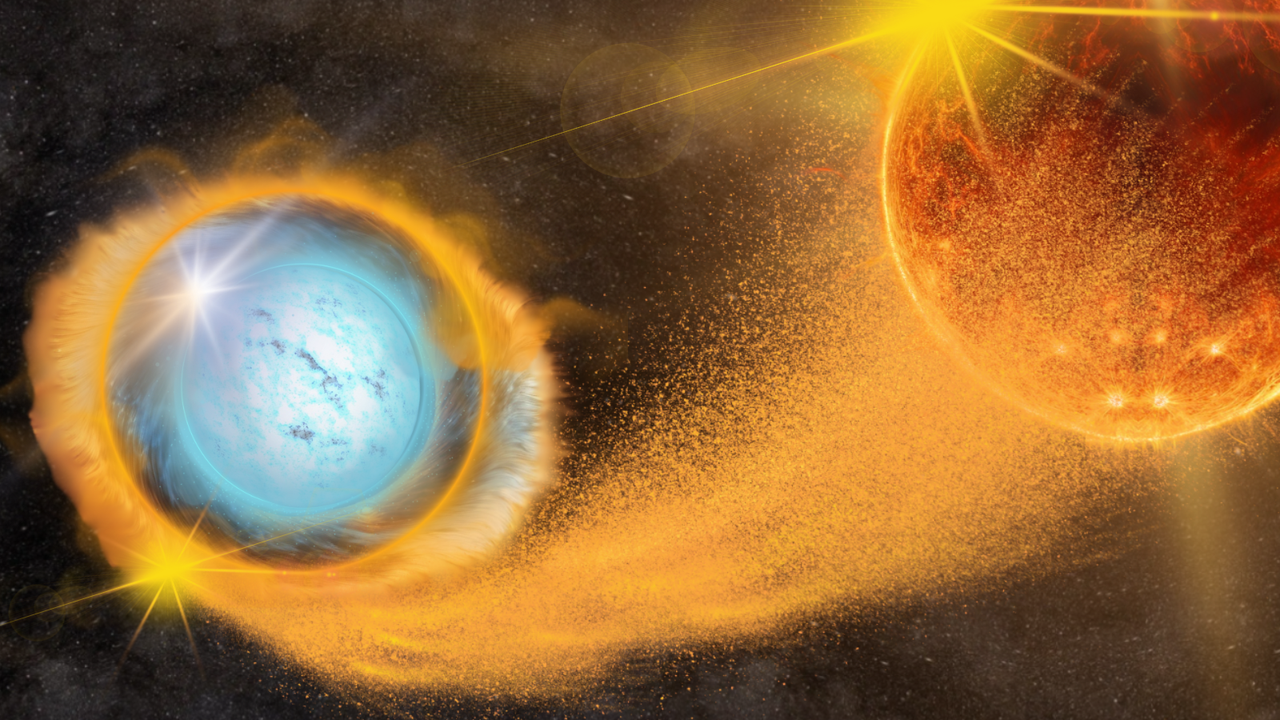
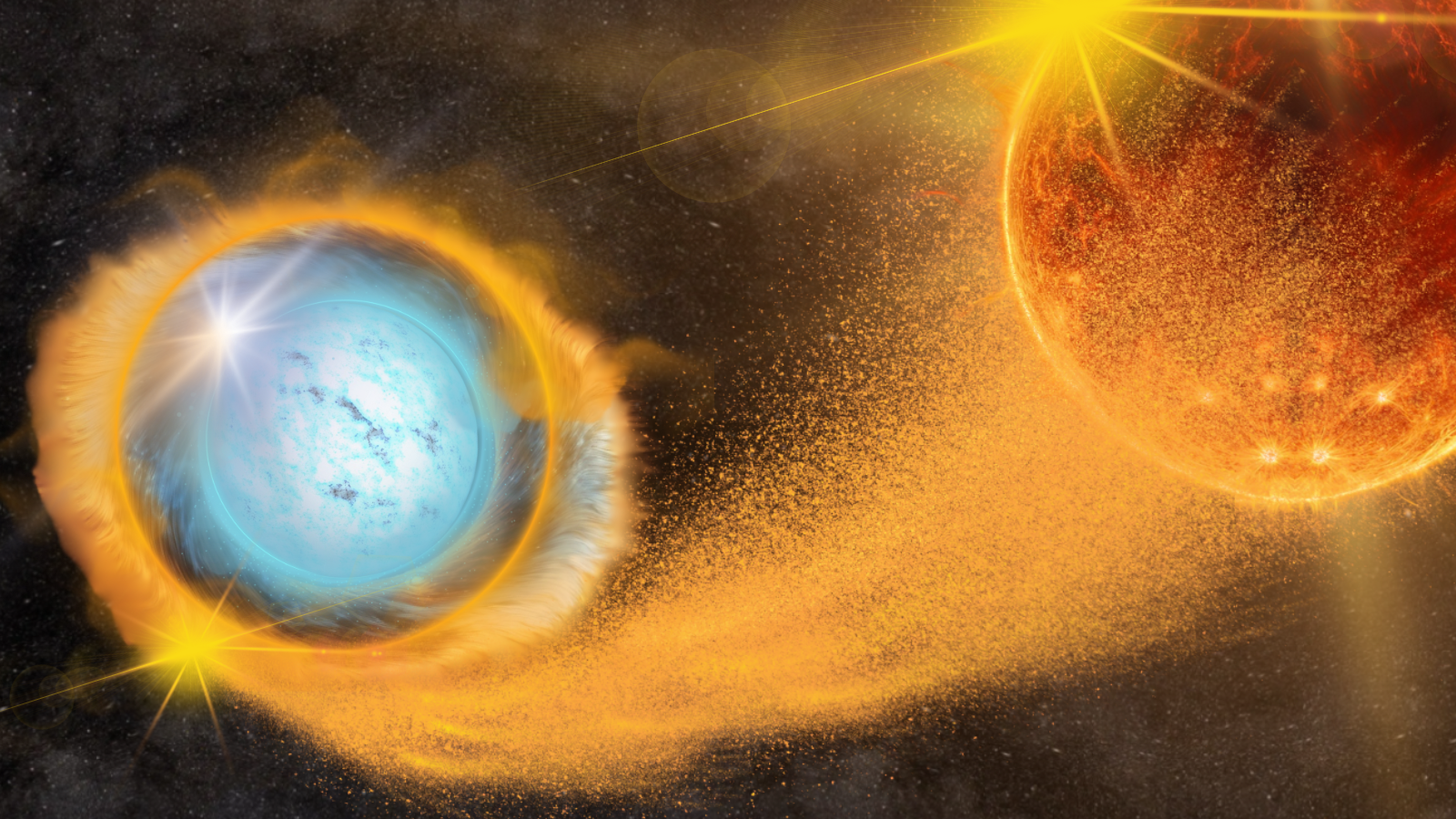
For decades, the accelerating expansion of the universe has pointed to a mysterious force we call dark energy. Its nature remains one of the biggest puzzles in physics. The key to solving it may lie in Type Ia supernovae — brilliant stellar explosions that serve as "standard candles" for measuring cosmic distances. But these candles are not perfectly understood. Some involve "cannibal stars" (white dwarfs that devour companion stars), and subtle differences in their explosions can introduce systematic errors. Enter the Vera C. Rubin Observatory and artificial intelligence (AI). Together, they are transforming how we study supernovae, hunting for unknown unknowns — hidden biases or new phenomena that could rewrite our cosmic recipe. This tutorial guides you through the science, the technology, and the steps researchers take to leverage this powerful combination.
Prerequisites
Before diving in, ensure you have a basic understanding of:
- Cosmology: Concepts like the expanding universe, dark energy, and the cosmic distance ladder.
- Supernova classification: Especially Type Ia supernovae and their role as standard candles.
- Machine learning basics: Supervised vs. unsupervised learning, anomaly detection, and neural networks.
- Large datasets: Familiarity with time-series data and astronomical surveys.
This guide is written for astronomers, data scientists, and enthusiasts. No coding is required, but code examples illustrate the workflow.
Step-by-Step Instructions
1. Understanding Type Ia Supernovae and Cannibal Stars
Type Ia supernovae occur when a white dwarf star accretes matter from a companion (the "cannibal" scenario) or merges with another white dwarf. The explosion is remarkably uniform in brightness, making it an excellent standard candle. However, variations in the companion type, metallicity, or explosion mechanism can distort the brightness-distance relation. This is where AI helps — by identifying subtle patterns that humans miss.
Key fact: The Rubin Observatory will detect thousands of supernovae each night, creating a deluge of data that no human can process manually.
2. The Rubin Observatory and Its LSST
The Legacy Survey of Space and Time (LSST) at the Rubin Observatory will repeatedly image the entire southern sky every few nights. Each image contains millions of galaxies and transient objects. The data volume is unprecedented — 20 terabytes per night. To handle this, automated pipelines are essential.
Rubin’s key contributions:
- High-cadence observations allowing light curves of supernovae to be captured in detail.
- Deep imaging reaching faint, distant supernovae.
- Multi-band photometry (u, g, r, i, z, y) for color information.
3. AI for Supernova Identification and Classification
Step-by-step workflow:
- Data ingest: Raw images from Rubin are processed to detect transient sources (objects that change brightness or appear).
- Feature extraction: Light curves (brightness vs. time) are computed in each band. Key features include peak magnitude, rise time, decline rate, and color.
- Machine learning classification: A trained model (e.g., random forest or neural network) classifies each transient into supernova types (Ia, Ib, Ic, II) or other artifacts (variable stars, AGN, etc.). Example using Python and scikit-learn:
from sklearn.ensemble import RandomForestClassifier
import pandas as pd

# Load training data with features and labels
data = pd.read_csv('rubin_sn_training.csv')
X = data[['peak_mag', 'rise_time', 'decline_rate', 'color_u_g']]
y = data['type']

model = RandomForestClassifier(n_estimators=100)
model.fit(X, y)

# Predict on new observations
new_sn = [[19.5, 15.2, 0.12, 0.3]]
prediction = model.predict(new_sn)
print(prediction)  # Output: 'Ia'
Note: This is a simplified example. Real pipelines use deep learning on image cutouts or probabilistic methods.
4. Hunting Unknown Unknowns with Anomaly Detection
Dark energy measurements rely on the assumption that Type Ia supernovae are well-understood. But there may be undiscovered subclasses or systematic effects — the unknown unknowns. AI can flag anomalies that deviate from the expected behavior.
Method: Use unsupervised learning (e.g., autoencoders or isolation forests) to model the normal distribution of Type Ia supernovae. Then, any detection with a high reconstruction error is flagged for human review.
Implementation sketch:
from sklearn.ensemble import IsolationForest

# Train on known Type Ia features
iso_forest = IsolationForest(contamination=0.01)
iso_forest.fit(X_known_Ia)

# Score new candidates
df['anomaly_score'] = iso_forest.decision_function(new_candidates)
# Flag those with low scores
anomalies = df[df['anomaly_score'] < threshold]
This process can reveal peculiar supernovae, microlensing events, or entirely new phenomena that could affect distance measurements.
5. Incorporating Discoveries into Dark Energy Constraints
Once Type Ia supernovae are identified and anomalies understood, cosmologists use them to construct the Hubble diagram — distance vs. redshift. The result constrains dark energy parameters (e.g., equation of state w). AI helps in two ways:
- Improved standard candle calibration: By correcting for subtle variations using machine learning (e.g., using neural networks to estimate luminosity from light curve features), the scatter in the Hubble diagram reduces.
- Filtering contaminants: Non-Type Ia supernovae are weeded out, preventing bias.
A simplified workflow:
- Collect all confirmed Type Ia supernovae from Rubin.
- Apply AI correction model to each light curve to obtain absolute magnitude.
- Calculate distance modulus and plot against redshift.
- Fit a cosmological model (e.g., Lambda-CDM) to derive dark energy density and equation of state.
Common Mistakes
- Overfitting the anomaly detector: Training on a small, non-representative sample of Type Ia supernovae can cause the model to treat normal variations as anomalies, or miss real outliers. Always use cross-validation and diverse training sets.
- Ignoring survey biases: Rubin’s observing cadence and detection efficiency vary. Failing to account for selection effects in the machine learning model can lead to biased distance measurements.
- Confusing correlation with causation: An AI model might find a correlation between supernova color and distance, but if color is itself affected by dust extinction, the correction can introduce systematic errors if not modeled properly.
- Neglecting human-in-the-loop: Anomaly detection should flag candidates for human inspection, not accept automatically. Some anomalies may be new physics, others just data artifacts.
Summary
The combination of the Rubin Observatory's massive supernova dataset and AI's pattern recognition capabilities promises to sharpen our understanding of dark energy. By automating classification, detecting unknown unknowns, and refining standard candle corrections, researchers can reduce systematic uncertainties and potentially discover new physics. This tutorial outlined the core steps — from supernova theory and survey design to machine learning workflows and cosmological analysis. As Rubin begins operations, expect breakthroughs that could reshape our cosmic recipe.
Return to Overview or Prerequisites