10 Key Updates on Motorola's 2026 Razr Series: Small Changes, Big Decisions
Motorola has officially refreshed its Razr lineup for 2026, but if you're expecting a major revolution, you might be disappointed. The new models—Razr, Razr+, and Razr Ultra—arrive with only a handful of tweaks compared to their 2025 predecessors. For enthusiasts already eyeing a clamshell foldable, this isn't necessarily a bad thing; the previous generation was already excellent. However, if you're debating whether to spring for the latest or hunt for a deal on last year's model, here are 10 things you need to know about the 2026 Razr series.
1. Three Models, Same Core Strategy
Motorola continues its three-tier approach: the standard Razr, the higher-end Razr+, and the premium Razr Ultra. Each retains the familiar clamshell design, with the main differences revolving around camera specs, display quality, and processor choice. The 2026 lineup doesn't introduce a new form factor or radically different hinge mechanism—instead, it refines an already proven formula. For shoppers, this means the decision largely comes down to budget and desired features rather than waiting for a groundbreaking innovation.
2. Fresh Color Options and Finishes
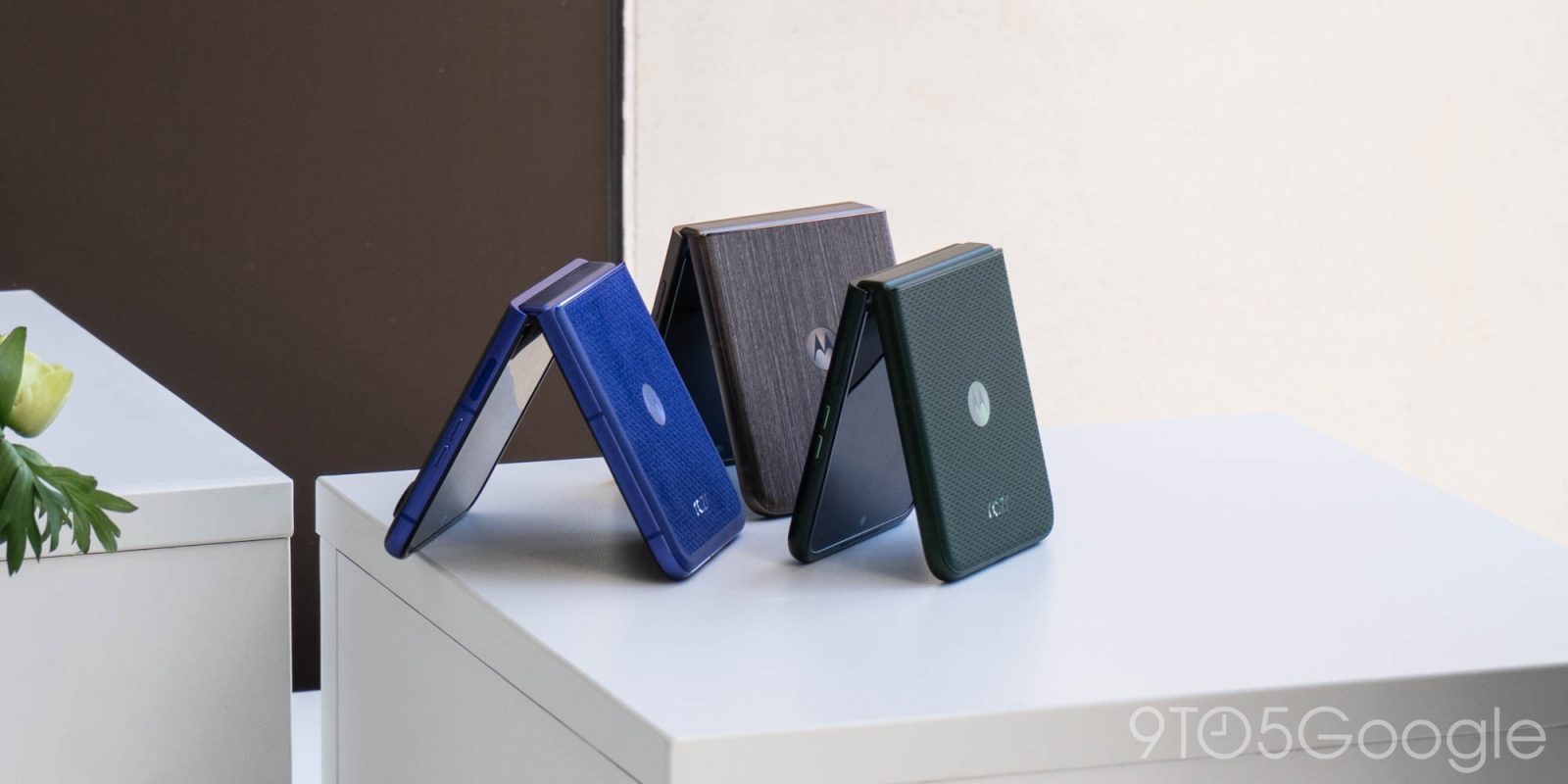
The most visible change is the palette. Motorola has introduced new colors: a vibrant “Electric Lime” for the standard Razr, a subdued “Graphite Gray” for the Razr+, and a striking “Iris Purple” for the Ultra. The finishes also get a subtle upgrade—soft-touch matte glass on the back, with a slightly more grippy texture that reduces fingerprints. While not a technical leap, these aesthetic updates give the 2026 models a distinct look that may appeal to style-conscious buyers.
3. Incremental Hinge Improvements
The hinge mechanism, a critical component of any foldable, sees a minor redesign. Motorola says the new hinge uses an updated “Flex360” system with tighter tolerances, resulting in a more reassuring “snap” when closing and a slightly flatter fold when opened. The company claims improved dust resistance thanks to better sealing, though official IP ratings remain unchanged (IPX8 for water, with no official dust rating). In practice, the hinge feels a touch smoother, but it's hardly a game-changer for most users.
4. Camera System: Same Sensors, New Software Tricks
Hardware-wise, the camera setups are nearly identical to 2025: a 50MP main sensor, a 12MP ultra-wide, and a 10MP telephoto (2x optical) on the Ultra model. The standard Razr still relies on a single 64MP main camera. However, Motorola has introduced new computational photography enhancements—improved night mode, better HDR processing, and a “Motion Capture” mode that reduces blur in fast-moving subjects. These software tweaks bring modest quality improvements, especially in low light, but don't expect a night-and-day difference compared to last year.
5. Processor Bump: Snapdragon 8 Gen 3 vs. Gen 2
Under the hood, the Razr+ and Razr Ultra now run on Qualcomm's Snapdragon 8 Gen 3 chip, while the standard Razr sticks with the Gen 2. The Gen 3 offers roughly 15% better CPU performance and 20% better GPU efficiency, translating to snappier app loading and slightly smoother gaming. For daily tasks, the difference is subtle—most users won't notice unless they're heavy multitaskers or mobile gamers. The standard model's Gen 2 remains perfectly capable, so this upgrade alone isn't a compelling reason to upgrade from 2025.
6. Brighter Cover Display (Razr+ and Ultra)
The cover display on the Razr+ and Ultra gets a brightness boost—now peaking at 1,800 nits (up from 1,600 nits). This makes it easier to use in direct sunlight. The 3.6-inch OLED panel retains the same 120Hz refresh rate and sharp resolution. The standard Razr's cover display remains a 1.9-inch panel with no changes. For those who frequently use the cover screen for widgets, notifications, or quick replies, the extra brightness is a welcome, albeit minor, enhancement.
7. Battery Capacity Remains Unchanged
Battery specs are identical to 2025: 4,200mAh in the standard Razr, 4,500mAh in the Razr+, and 4,800mAh in the Ultra. Charging speeds also remain the same—68W wired and 15W wireless for the Ultra, 45W wired and 10W wireless for the others. Given the more efficient processor, battery life should be slightly better (about an hour extra of screen-on time), but the physical capacity hasn't grown. If battery life was a concern on 2025 models, the 2026 lineup doesn't address it head-on.
8. Price Increases (and What You Get for the Extra Cost)
As expected, Motorola has raised prices across the board: the standard Razr now starts at $799 (up from $749), the Razr+ at $999 (up from $949), and the Razr Ultra at $1,149 (up from $1,099). The price bumps are modest (around $50 each) and reflect inflation as well as the cost of the new hinge and chipset. Pre-order bonuses include a free case and a year of Google One storage. For budget-conscious buyers, last year's models—now discounted—offer better value for nearly identical features.
9. Software: Android 15 and New Moto Gestures
The 2026 Razr series ships with Android 15 out of the box, alongside Motorola's My UX enhancements. New gestures include a “swipe to split” that quickly opens two apps on the main display, and an improved “peek display” that shows notifications when the phone is resting face-down. Motorola promises three major OS updates and four years of security patches—matching Samsung's foldable policy. The software experience remains clean and near-stock, which fans appreciate.
10. Should You Upgrade or Wait?
Given the minimal changes, the 2026 Razr lineup is best suited for first-time foldable buyers or those upgrading from much older models (like the Razr 2023 or earlier). If you own a 2025 Razr, there's little reason to jump—the camera, battery, and overall experience are nearly identical. For deal hunters, picking up a 2025 model at a discount is a smarter move. Motorola's incremental update strategy suggests the company is focusing on refining rather than reinventing, which is fine but may not excite power users.
In summary, the 2026 Motorola Razr series offers subtle refinements in hinge feel, processor efficiency, and color options, but fails to deliver any killer feature that justifies upgrading annually. If you're in the market for a stylish foldable, you won't be disappointed—but you also won't miss out by grabbing last year's model for less. The choice ultimately comes down to how much you value the latest chipset and a fresh coat of paint.